Choosing the right injection molding machine requires more than selecting a clamping tonnage. A reliable specification must match the molded part, projected area, expected cavity pressure, shot size, resin, mold dimensions, cycle target, utility capacity, automation, and service plan. The most useful first step is therefore to create a process data sheet before comparing machine models.
This guide explains the main selection criteria, the questions to include in a request for quotation (RFQ), and the limits of using headline specifications alone.
What information should you collect before selecting a machine?
Machine selection starts with the part and process—not with a supplier catalog. Prepare the following information for every part family you expect to run:
- Part drawing, dimensions, weight, and projected area
- Resin grade, filler or reinforcement, color masterbatch, and expected regrind ratio
- Number of cavities and runner system
- Mold dimensions, weight, locating ring, sprue details, and required opening stroke
- Estimated cavity pressure and required clamping margin
- Total shot weight, screw recovery time, and target cycle time
- Core pulls, unscrewing, air circuits, valve gates, and robotic interfaces
- Available voltage, cooling water, compressed air, floor space, and lifting access
If a value is unknown, identify it as an assumption. A supplier can help estimate missing process values, but the final choice should be confirmed by mold data and a representative trial.
How should clamping force be selected?
Clamping force keeps the mold closed while plastic pressure acts on the projected area of the parts and runners. In simplified terms:
Required clamping force ≈ total projected area × expected cavity pressure × safety factor.
The pressure used in this calculation is not simply the machine’s maximum injection pressure. It depends on material, wall thickness, flow length, gate design, mold temperature, and filling speed. Too little clamping force can cause flash. Excessively oversizing the machine may increase capital cost, energy use, floor space, and mold protection risk without improving part quality.
Ask the machine and mold suppliers to document the projected-area calculation and the pressure assumption. For new or difficult parts, molding simulation and a mold trial provide stronger evidence than a generic tons-per-square-inch rule.
Shot size and plasticizing capacity are different checks
Shot size is the material volume or mass delivered during one cycle. Plasticizing capacity describes how quickly the screw can prepare a stable, homogeneous melt for the next shot. Both must be adequate.
Calculate the total shot from the parts, runners, and any process allowance, then convert it for the actual resin density rather than relying on a polystyrene-equivalent catalog value. Avoid operating continuously at the extreme minimum or maximum of the barrel’s usable shot range. Excessive residence time can degrade heat-sensitive materials, while insufficient recovery capacity can extend the cycle.
Verify mold fit before comparing performance
| Machine interface | What to compare with the mold | Risk if overlooked |
|---|---|---|
| Tie-bar spacing | Mold width and height during installation | The mold cannot pass between the tie bars |
| Platen dimensions and mounting | Bolt holes, T-slots, locating ring, support area | Unsafe or impractical mold installation |
| Mold thickness range | Closed mold height | Insufficient adjustment or locking range |
| Opening stroke and daylight | Part depth, cores, robot access, ejection space | The part cannot be removed reliably |
| Ejector force and stroke | Part release requirement | Incomplete or unstable ejection |
| Nozzle geometry | Sprue bushing radius and opening | Leakage, drool, or poor seating |
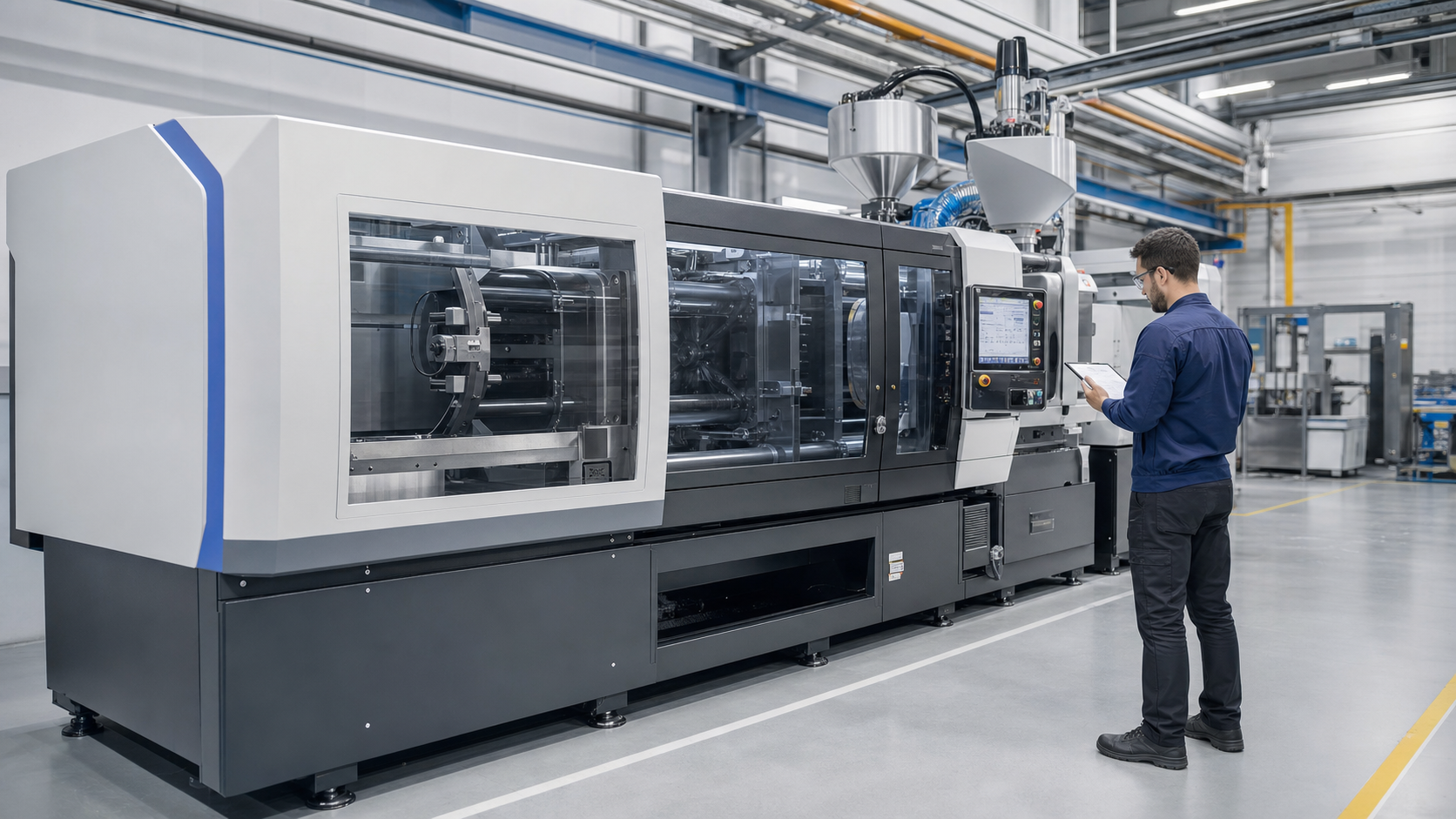
Harun’s VR Series, for example, emphasizes wider tie-bar spacing, platen rigidity, modular injection units, and flexible mold mounting. Those features should still be checked against the actual mold drawing rather than treated as universal compatibility.
Match the screw and barrel to the resin
A general-purpose screw may be suitable for many commodity polymers, but engineering resins, glass-filled compounds, PVC-related applications, PET, and other sensitive materials can require different screw geometry, wear protection, corrosion resistance, temperature control, or material handling. Supply the exact resin grade and processing window during quotation.
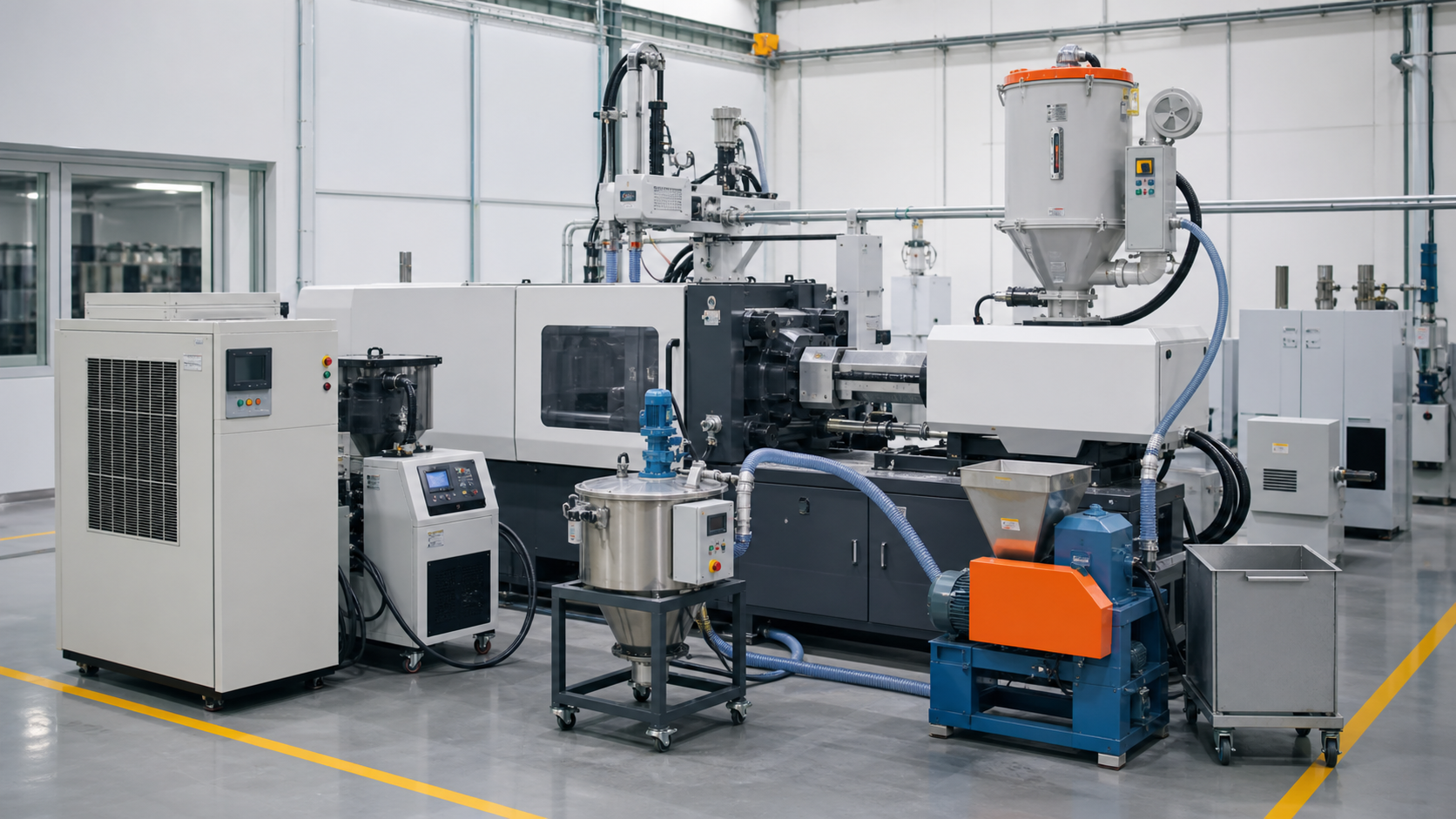
Also consider how frequently colors and materials change. Purging time, cleanability, dead spots, barrel access, and automatic material handling can have a larger effect on daily output than a small difference in theoretical injection rate.
How should energy performance be compared?
Do not compare machines only by installed motor power. EUROMAP 60.1 describes specific energy consumption in kWh/kg and makes an important limitation clear: energy values are meaningful only when machines of comparable size and configuration are tested under comparable conditions. Part, material, cycle, auxiliaries, and operating mode all affect the result.
Request measured data for a relevant trial, including cycle time, good-part weight, total machine energy, cooling conditions, and whether dryers, chillers, and other auxiliaries are included. Harun states that its HRL servo-hydraulic series varies output with load; any project-specific savings should be verified with the proposed configuration and process.
Safety and maintainability belong in the purchase specification
OSHA identifies the mold area of horizontal injection molding machines as a potential crushing and amputation hazard. A machine evaluation should therefore include guards, interlocks, emergency stops, safe access, written lockout/tagout procedures, and operator training. Maintenance access, hose routing, filtration, lubrication points, spare-parts availability, and diagnostic support also affect uptime and lifetime cost.
A practical injection molding machine RFQ checklist
- Attach the part drawing, mold drawing, and resin data sheet.
- State cavities, shot weight, projected area, cycle target, and annual volume.
- List every core pull, robot, hot runner, sensor, and auxiliary interface.
- Ask the supplier to show the clamping-force and injection-unit calculations.
- Confirm mold fit with a signed interface drawing.
- Define the factory acceptance test using your resin, mold, and measurable quality criteria.
- Request energy, cycle stability, repeatability, scrap, and utility data from the trial.
- Agree on training, documentation, warranty, critical spares, and response times.
Which Harun series should you discuss?
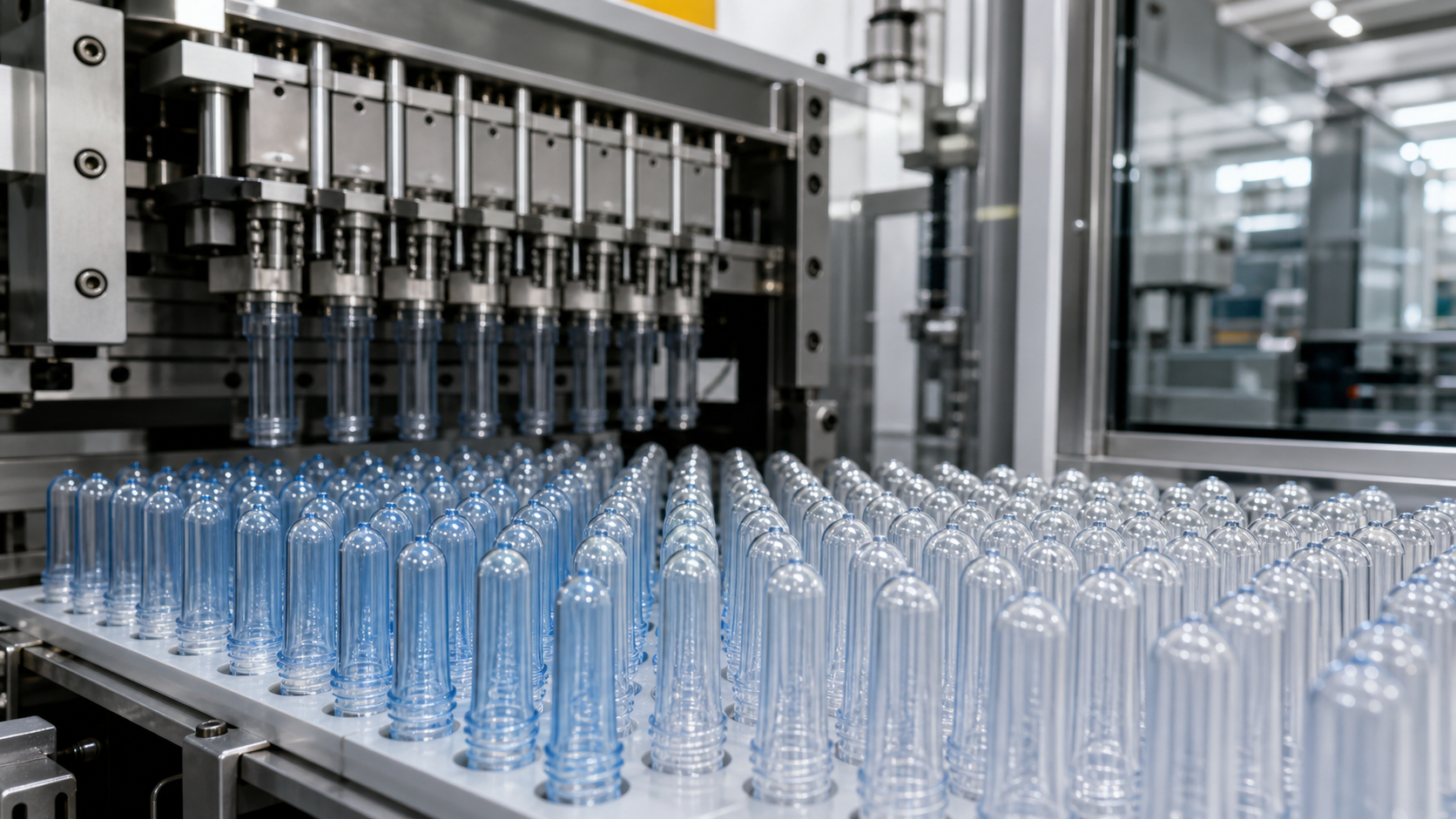
The appropriate platform depends on the part and mold. Harun’s HRL Series covers a broad range of servo-hydraulic applications, while the VR Series focuses on mold space, rigidity, injection response, and integration. Application-specific lines are available for PET preforms, pipe fittings, and other products.
Send Harun Machinery your part, mold, resin, and output requirements to receive a configuration proposal based on the actual application.
Sources and scope
- EUROMAP 60.1: Energy Efficiency of Injection Moulding Machines
- OSHA: Horizontal Injection Molding Machines
- Harun HRL Series and Harun VR Series
Reviewed August 2026. Final machine sizing requires project-specific engineering data and a representative mold trial; this article is a procurement guide, not a substitute for the machine and mold suppliers’ calculations.